benlong



Auxiliary and Signal Contact test bench
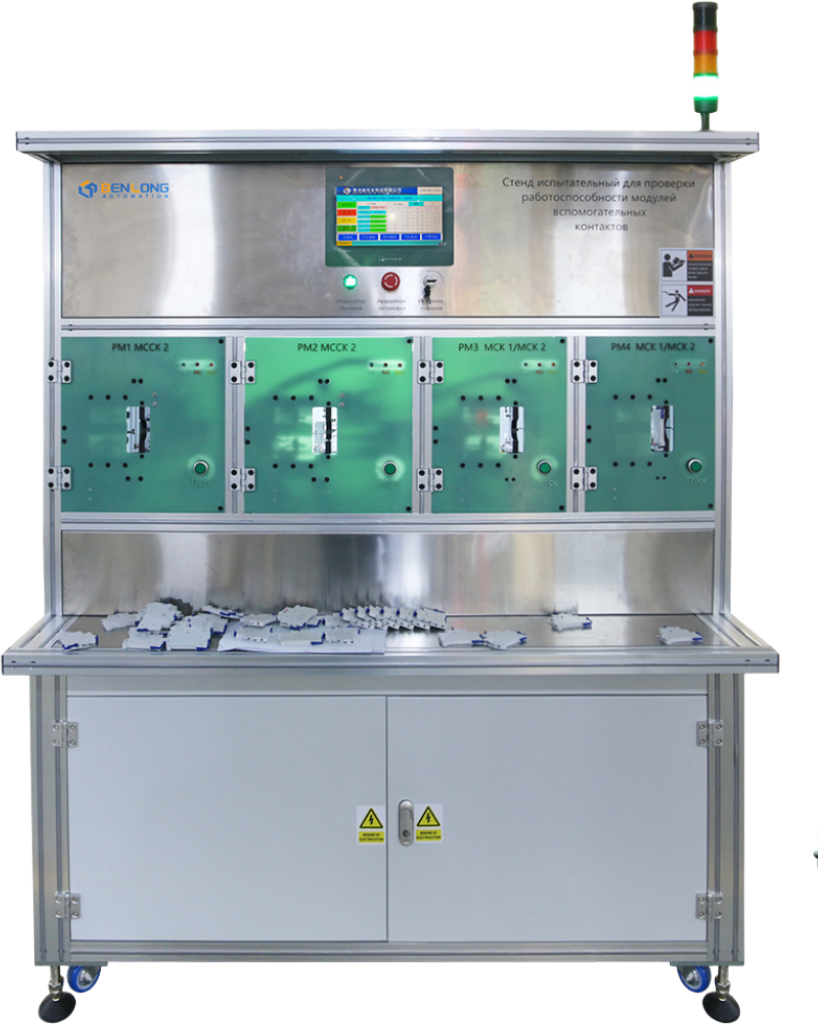
Auxiliary and signal contact test bench for RCBO/MCB. Tests dual‑mode logic (Auxiliary & Alarm), contact resistance (<50mΩ), and dielectric strength (1500V/2000V). Eliminates false alarms, detects oxidation, ensures insulation integrity. Ideal for QC labs and production lines. IEC 60947‑5‑1 compliant.
Auxiliary & Signal Contact Test Bench for RCBO/MCB
Automated and manual testing of auxiliary contacts and alarm contacts (or signals) is performed on the bench. The bench will confirm that the contact state has changed from normal to reverse (or vice versa) for each time the breaker handle is manually opened or closed (verify the state of an auxiliary contact for each time a person manually opens or closes the breaker handle). The bench will confirm that the contact state will NOT change while the breaker is being manually opened (verify the state of an alarm contact while a person is manually opening the breaker) or changed when a fault has occurred, but it WILL change state when a fault trip is simulated. (The simulation is accomplished with either the RCBO test button or producing a dead short.) The bench will also measure the auxiliary contact resistance using a micro-ohmmeter and perform hi-pot testing to confirm that no leakage current occurs. The bench is suitable for QC labs and production lines, as well as incoming inspection of an auxiliary contact module.
Standard delivery: 30-45 days | Dual‑mode logic testing | Contact resistance & hi‑pot

What Problems Does This Test Bench Solve?
The auxiliary/signal contacts are essential components when doing remote monitoring of circuit breakers. However, there are three major problems common to both manufacturers and users of circuit breakers: incorrect switching logic (e.g. alarm triggering on manual opening, producing false alarms); high contact resistance (oxidation of contacts will result in loss of signal transmission); and insulation breakdown (this can create a safety issue). The bench will remedy all three problems with a tested sequence to validate the dual mode logic (Auxiliary vs. Alarm), measure contact resistance ( to Identifying Broken Circuit Breakers).
Test Auxiliary mode (contacts change with handle) and Alarm mode (contacts only change for a fault trip and not for a manual open).
Measures resistance of closed contacts (<50mΩ typical) – detects oxidation or poor contact that can cause signal failure.
Applies 1500V or 2000V AC between terminals to verify insulation integrity, per IEC 60947‑5‑1.
Checks proper fitment and actuation of the auxiliary/signal contact when mounted on RCBO/MCB.
Test Process & Customer Benefits




Technical Specifications
| Test functions | Auxiliary mode logic, Alarm mode logic, contact resistance, dielectric strength (hi‑pot), mechanical interlock |
|---|---|
| Contact resistance measurement | Range 0‑200mΩ, accuracy ±1%, test current 1A DC (micro‑ohmmeter) |
| Contact resistance acceptance | <50mΩ (typical), programmable limit |
| Hi‑pot test voltage | 1500V AC / 2000V AC (programmable, 1‑60 seconds) |
| Leakage current threshold | Programmable (e.g., 5mA, 10mA) |
| Auxiliary mode test | Manual handle operation (close/open) – automatic continuity check on NO/NC contacts |
| Alarm mode test – manual opening | Contact must NOT change state |
| Alarm mode test – fault trip simulation | Contact must change state (NO→closed, NC→open) instantly |
| Fault trip simulation method | For RCBO: automatic “T” button press; for MCB: short‑circuit current injection (optional) |
| Power supply | 220V ±10% 50Hz |
Core Customer Benefits – Why Manufacturers Use This Bench
Benefit 1: Eliminates false alarms in the field
Alarm contacts will only be tested as functioning properly (i.e. alarm contacts) when an actual fault occurs (E.G. pressing the RCBO test button or simulating a short circuit). They will also be tested correctly when the breaker is opened manually, without causing a false alarm, which will help eliminate the wasted resources required to repair false alarms that create uncertainty among customers about the reliability of their equipment.
Benefit 2: Detects contact oxidation before it causes failure
Field returns and Service Calls Are Expensive for Manufacturers; High Contact Resistance Measurement (50mΩ) Causes Signal Intermittency or Drop Out. Manufacturers Capture This Intermittent Signal and Make Repairs to the Equipment before It Is Called back to a Service Center.
Benefit 3: Ensures insulation integrity for safety
A dielectric strength test is performed by applying the specified high voltage (1500V or 2000V) across the terminals and checking for insulation failure, as well as leakage current. As a result, a dielectric strength test is especially important for devices that have auxiliary contacts that connect to low voltage PLCs or control circuits because any failure of the insulating material could result in damaging very expensive automation equipment or creating a shock hazard.
Benefit 4: Fast, repeatable testing
By automating the dual-mode logic test sequence, bench tests can now complete validation/testing of an auxiliary contact module in less than 30 seconds compared to several minutes of manual multimeter testing. A single operator can test hundreds of these modules during a shift and repeatable results will be consistent with 100% accuracy.
















Customer Success – Eliminating False Alarm Returns
An established RCBO company had 5% of its field returns to auxiliary contact modules and these generated false alarms when the system was manually opened. The company investigated the reason for these issues and discovered that the source of the problem was inconsistent logic testing during production. They subsequently introduced an auxiliary and signal contact test bench with automated dual-mode testing for logic verification and achieved:
The bench recouped its costs within 4 months of purchase, in addition to being the premier testing station for every auxiliary contact produced.
Applications – Where This Bench Adds Most Value
Custom Engineering & Delivery
Request a Custom Auxiliary Contact Test Bench Quote
Please supply auxiliary/signal contact test specifications and samples. We will design a test rig featuring dual-mode, contact resistance (low level) as well as hi-pot testing and calculate an ROI.
WhatsApp: +86 150 5837 0007 | Email: xsb@benlongkj.cn | English & Chinese support
Why Choose Benlong for Contact Test Benches?
- 15+ years designing contact test equipment for low‑voltage electrical components
- Proven dual‑mode logic testing (Auxiliary vs. Alarm) – eliminates false alarms
- Integrated contact resistance measurement (±1% accuracy) and hi‑pot testing
- Universal fixture for multiple auxiliary contact models
- Global service and spare parts support
Standard Bench Includes
Auxiliary signal contact universal device, with automatic handle operation in auxiliary mode, fault trip simulator and/or test button actuator for short circuit injection. Micro ohmmeter for contact resistance. High Potential AC tester for 2000 V. PLC with HMI. OK/NG Indicator lights. Safety enclosure. User’s manuals. Calibration certificates. 1 Year warranty.
Frequently Asked Questions
Contacts for auxiliary mode change state on each operation of the circuit breaker handle, whether using manual operation (like opening or closing) as remote indication of position; they do not change state due to a tripping event (fault), such as an overload or short circuit. The contacts used in the alarm mode indicate the breaker’s status upon tripping, caused by a fault. The purpose of testing the bench in both modes is to verify the expected operation of the contacts.
With RCBOs, the test circuit does not have to be created because the bench will automatically test by pressing the T (test) button located on the breaker cover. With MCBs, the bench may inject an adjustable short circuit current to create an envelope for the magnetic tripping mechanic to work, or the use of a mechanical actuator to trip the mechanism will also require the creation of a test circuit. The contact state change is verified in real time.
IEC 60947‑5‑1 recommends <50mΩ for new contacts. The bench allows you to set a programmable upper limit (e.g., 50mΩ). Higher resistance indicates oxidation, contamination, or insufficient contact pressure, which can lead to intermittent signal transmission.
Yes. There are probes on the universal fixture that can be adjusted to accommodate various pin configurations. Once the product recipe is chosen, the test sequence will determine the pin configuration for you.
The bench tests the continuity of the NO and NC contacts throughout the entire test sequence. In the Auxiliary test, there should be continuity through the NO contact while the breaker is in the ON position and the NC contact while the breaker is in the OFF position. The Alarm mode will test to ensure that only the appropriate contact will change state when a fault trip occurs.
Related Products
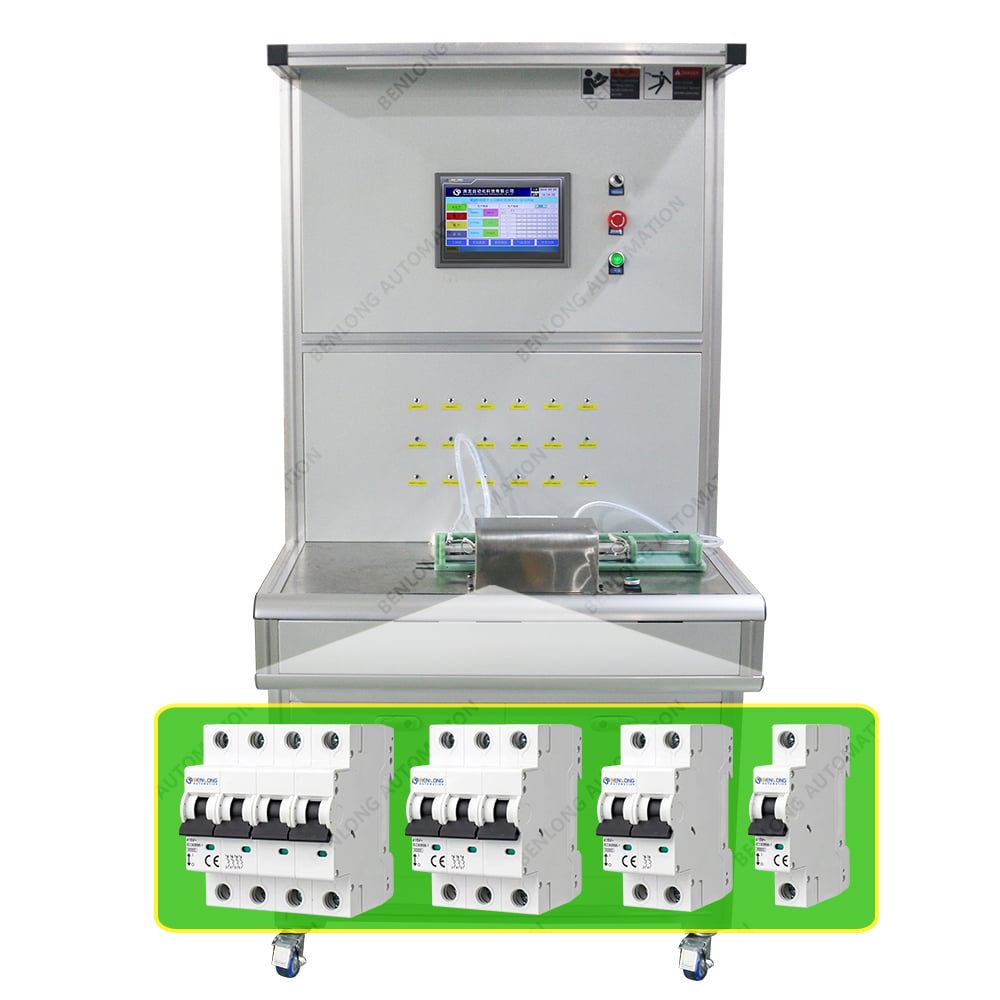
MCB semi-automatic magnetic trip test bench
View Details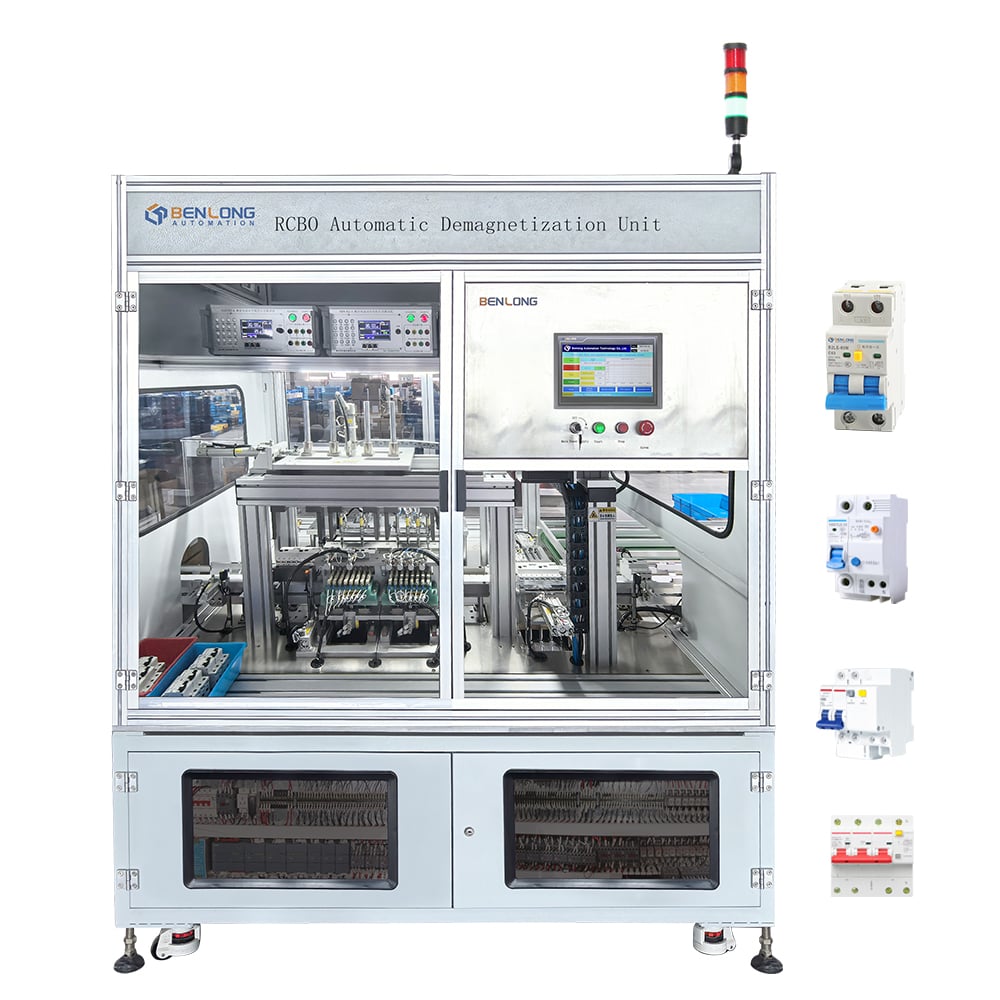
RCBO Automatic Magnetic Reset + Testing machine
View Details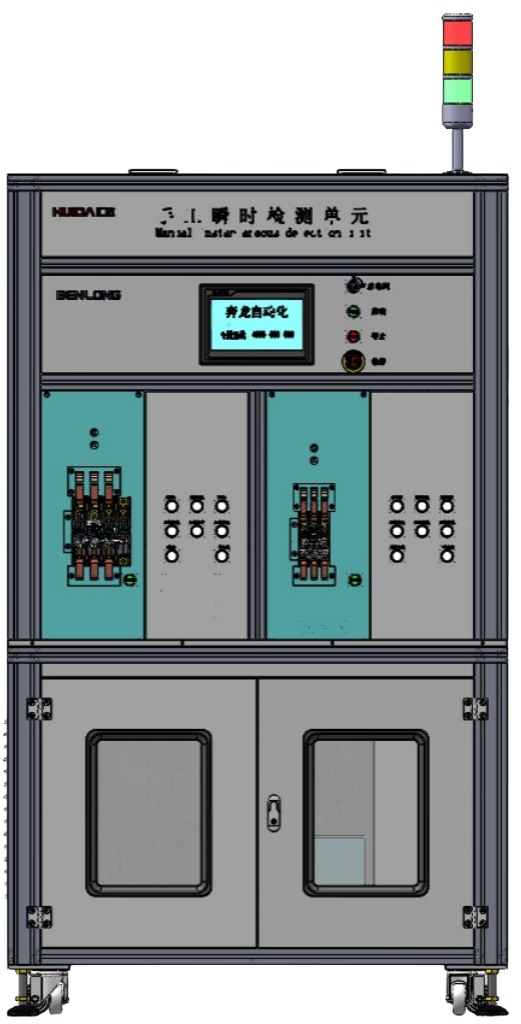
MCCB manual magnetic trip test bench
View Details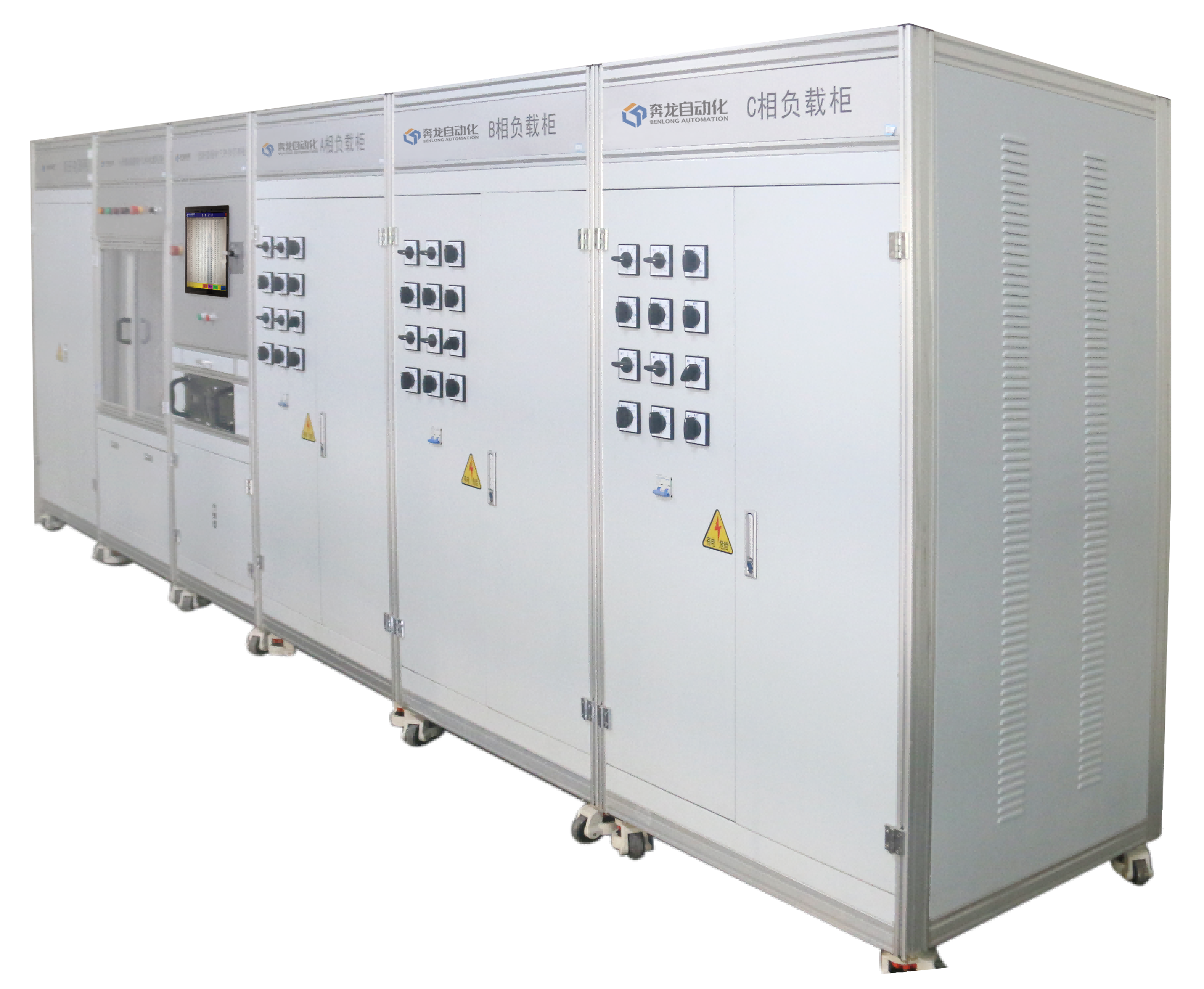
MCB Electrical Endurance Test Bench
View Details
MCB semi-automatic thermal trip calibration bench Type-B
View Details