benlong



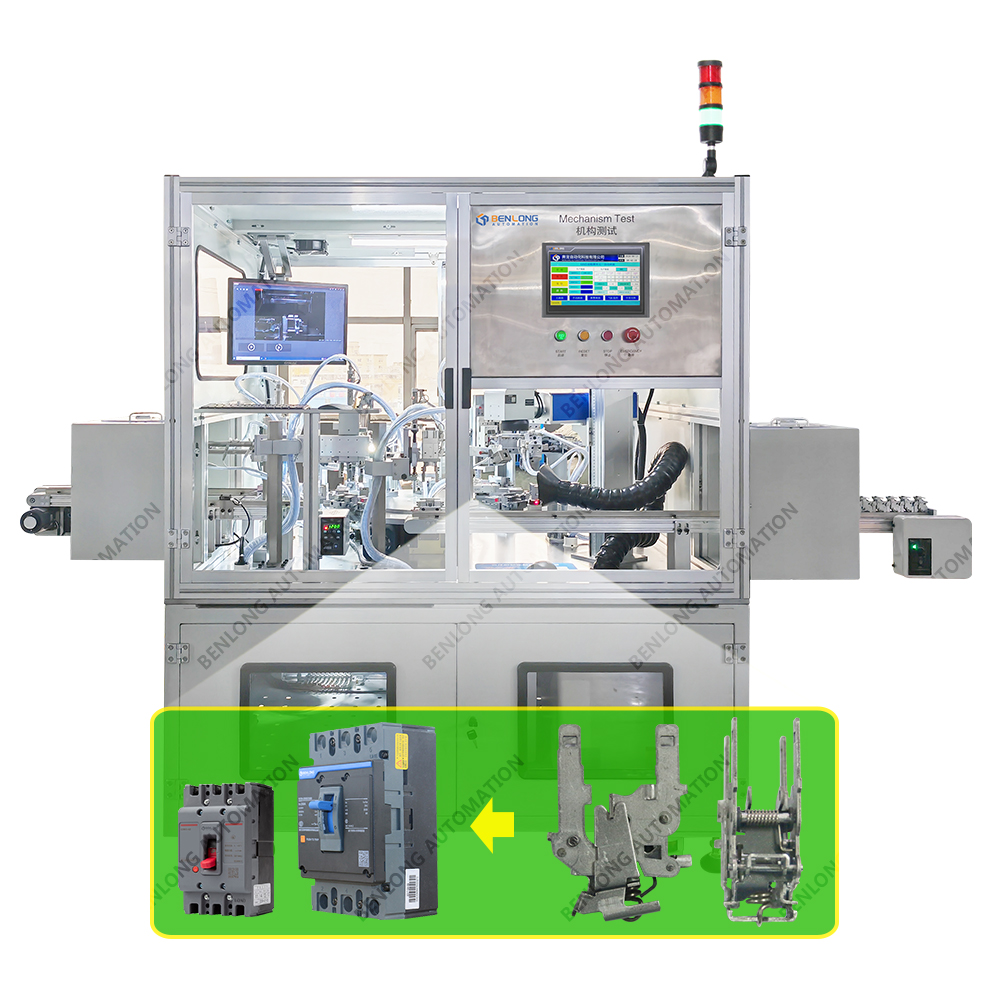

MCCB Tripping mechanism test machine
Automatic MCCB tripping mechanism test machine with rotary indexing turntable. Vision‑based closing/opening angle measurement (±0.1°), contact & tripping force testing, peak force analysis, release verification, and QR laser marking for full traceability. 3‑5 sec/part. Ideal for high‑volume MCCB production.
High‑Throughput MCCB Tripping Mechanism Automatic Test Machine
This machine consists of a rotary-indexing automatic testing mechanism designed specifically for checking the function and mechanical performance of various parts of an MCCB trip mechanism. The rotary indexing test machine uses a high speed, precision turntable indexing design allowing it to conduct ongoing, stable testing at high production rates. It combines several inspection modules, including vision-based measurement of the closing/opening angle, contact force and trip force measurements, peak force analysis, verifying release, and laser printing a QR code barcode on each product for complete traceability.
An industrial vision system (Hikvision cameras) is housed at the testing facility to measure angles with no contact, thus accurately detecting the orientation and consistency of motion. In addition, force-displacement characteristics are recorded by using dedicated force sensors during tripping to evaluate the highest force recorded in the tripping process, as well as the release behaviour.
A centralised PLC and an industrial PC synchronise all tests at their start so that each testing station has the same conditions when conducting a test. Each component will receive a unique QR code which is laser-marked to the part once it has been qualified and contains the entire test record of all tests performed to that point.
The above solution increases efficiency, accuracy, and quality control for MCCB manufacturers as it automates, standardises, and provides traceability of their testing process.
Standard delivery: 45-60 days | Vision angle measurement | Force & peak analysis | QR traceability

What is an MCCB Tripping Mechanism Test Machine?
The MCCB test machine is an automated systems designed specifically for testing the mechanical and functional properties of all molded case circuit breakers tripping mechanisms. These tripping mechanisms consist of cradles, latches, springs, and linkage used to operate the contacts when overloaded or shorted. The MCCB test machine uses a rotary indexing table with multiple test stations to check these areas: vision-based measurement of angles (opening/closing), measurement of the force required to operate a contact, measurement of the force required to trip the circuit, measurement of the maximum trip force, verification of the ability to release, and marking a QR code. All test data is saved and linked to a specific QR code providing for full traceability of results. The system is built for high volume manufacturing environments where repeatability, speed, and data integrity all play an important role in producing quality products. A custom non-standard solution, the fixtures, vision algorithms and force range are designed specifically for your MCCB tripping mechanism.
Continuous high‑throughput testing with multiple independent stations.
Hikvision cameras for non‑contact closing/opening angle detection.
Force sensors for peak force analysis and release verification.
Unique code linked to test data for full lifecycle tracking.
Test Process & Key Stations



Technical Specifications
| Test station architecture | Rotary indexing turntable with 4‑8 independent stations (customizable) |
|---|---|
| Vision measurement | Hikvision industrial camera, angle resolution ±0.1°, non‑contact |
| Force measurement range | 10 – 200 N (contact force & tripping force), accuracy ±1% FS |
| Peak force analysis | Automatic recording of maximum tripping force during release |
| Release verification | Sensors confirm correct disengagement and reset after tripping |
| QR code marking | Fiber laser (20W), DataMatrix/QR code, automatic after pass |
| Test cycle time | 3‑5 seconds per component (depends on station count) |

| Data traceability | Test results (angles, forces, pass/fail) linked to QR code; MES upload |
| Control system | PLC (Siemens/Mitsubishi) + industrial PC, HMI for recipe management |
| Power supply | 380V ±10% 50Hz | Compressed air 0.6MPa |
Core Technical Advantages
High‑throughput rotary indexing design
Utilizing the turntable design enables multiple workstations to perform testing at the same time (Loading Test, Vision Test, Force Test, Marking Test, Unload Test). This reduces time loss due to down time and produces cycle times as low as 3 to 5 sec/unit; making it suitable for production lines.
Non‑contact vision angle measurement
Hikvision cameras used for industrial applications allow for non-contact measurement of the angle of closure and the angle of opening of a mechanism, preventing wear and providing the ability to repeat measurements on multiple cycles. The system automatically detects any deviation from the nominal design angle, thus identifying any mechanisms that have been improperly assembled or have been manufactured out of specification.
Comprehensive force & release analysis
Using highly accurate load cells, the device measures both the force of contact (spring preload) as well as the force of tripping (force necessary to unlatch). In addition, peak force during tripping is reported and sensors are used to confirm that all mechanisms have returned to normal configuration (fully reset) after they are tripped—this is important for MCCB reliability.
Full traceability with QR laser marking
Every passing device gets permanently marked with a QR Code (laser engraved). The QR Code links to a database that contains details of all the test results (Angles, Forces, Maximum Value, and Pass/Fail). The QR Code provides complete traceability from the assembly of the device to the completion of the MCCB test. This is in accordance with the requirements of ISO 9001 and IATF 16949.
















Customer Success Story – MCCB Manufacturer
An industry-leading manufacturer of MCCBs was manually calibrating values or the machine’s trip mechanism parts with gauges or force meters, but there was still 3% of their products that failed in the field due to inconsistent release force. Benlong supplied an 8-station rotary indexing test machine capable of checking vision angle (of the trip mechanism) testing the force it takes to release and marking it with a QR code. After being operational for only 4 months:
The machine paid for itself in 10 months and provided complete test documentation for an IEC audit.
Applications and Integration
Custom Engineering & Delivery
Request a Custom MCCB Tripping Mechanism Test Machine Quote
To develop a full ROI analysis, please send your trip mechanism sample(s) and testing requirements to us. We will build a complete rotary indexing testing system that includes vision angle measurement, force testing, and QR traceability.
WhatsApp: +86 150 5837 0007 | Email: xsb@benlongkj.cn | English & Chinese support
Why Choose Benlong for MCCB Mechanism Testing?
- 15+ years designing rotary indexing test systems for MCCB components
- Proven vision‑based angle measurement (Hikvision cameras) and force sensing
- Integrated QR laser marking for full traceability
- High throughput (3‑5 sec/part) with continuous operation
- Global service and spare parts support
Typical Custom System Includes
– Rotary indexing turntable with up to 8 stations
– Vision system with open/close angle detection
– Force sensors (for both contact & tripping force)
– Software to analyze peak forces
– Sensors to verify release of items after operation
– 20W fiber laser marking machine
– PLC using Siemens with HMI
– Data logging; MES interface
– Safety guarding, installation, & training
– Total Warranty Period: 1 year
Frequently Asked Questions
The vision system checks the angles of the trip mechanism during closing and opening, so it can record the angle of the latch and cradle at the end of the closing stroke and at the trip point. The system has a repeatability of ±0.1° to help identify whether there may be issues with the assembly tolerances.
A servo actuator is connected to a load cell (a measuring device) to increase the force applied on latches until they release. The system records the amount of force applied to trip the mechanism (peak) and produces a force profile as well. A release verification sensor will determine if the mechanism has completely returned to the beginning position after tripping.
You are correct; the fixtures and test stations enable fast changeovers. Different sizes of mechanisms entail using different dedicated tooling (nests/grippers) on each mechanism, while the vision and force sensors are adjustable. Typically, changing over from one tool/fixture to another takes approximately 15-20 minutes.
The information contained within the database includes the following information: Closing angle, Opening angle, Contact force, Tripping Force, Peak force, Release Verification Status, Test date and time, and the QR code. Additionally, all of this data can be exported to either MES or CSV for batch traceability.
A 6-station turntable consists of six stations (loading, vision, force, releasing, marking and unloading) and takes 3-5 seconds to complete a cycle on each component. This is measured and marked at the same time.
Related Products
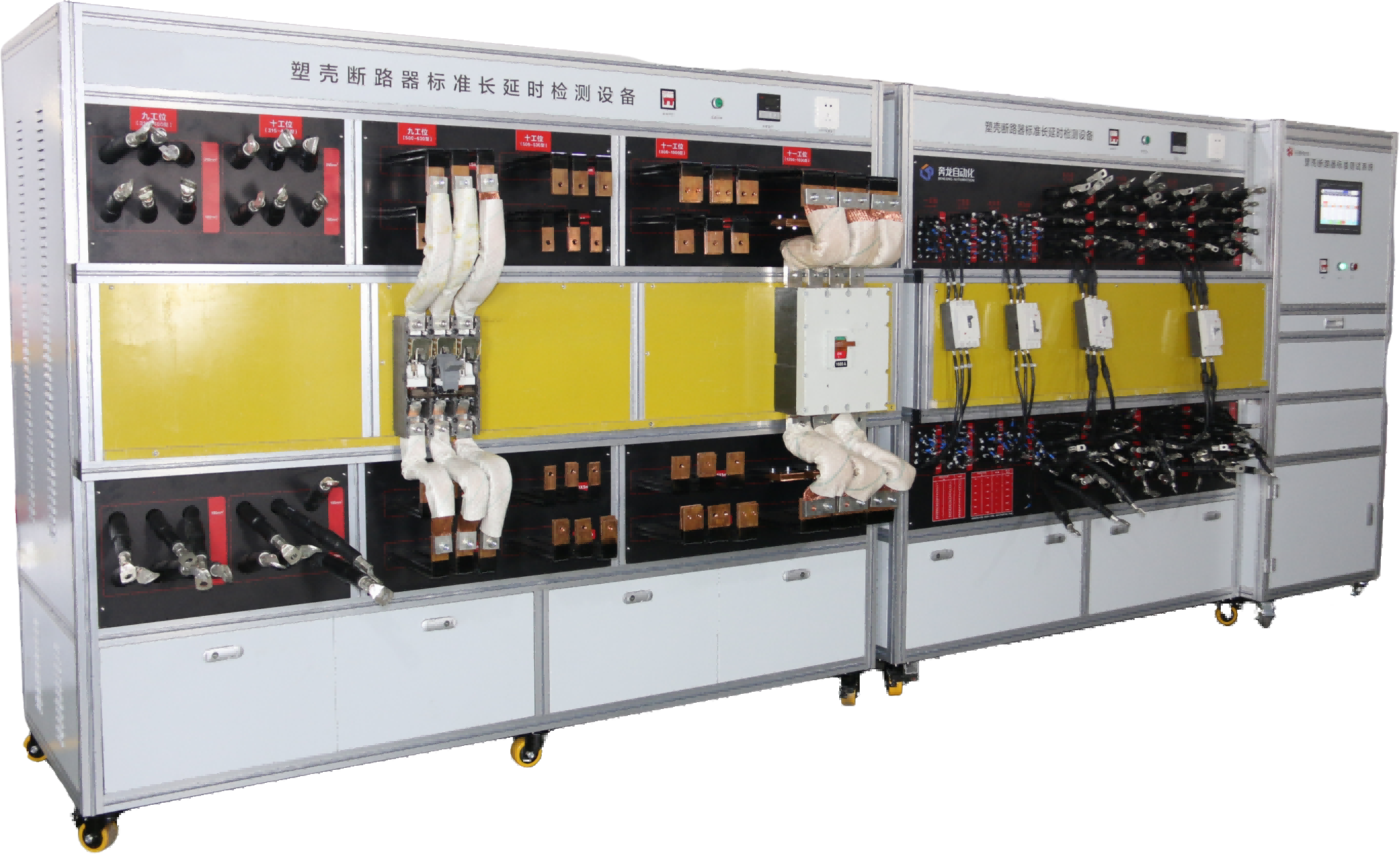
MCCB long time thermal calibration bench
View Details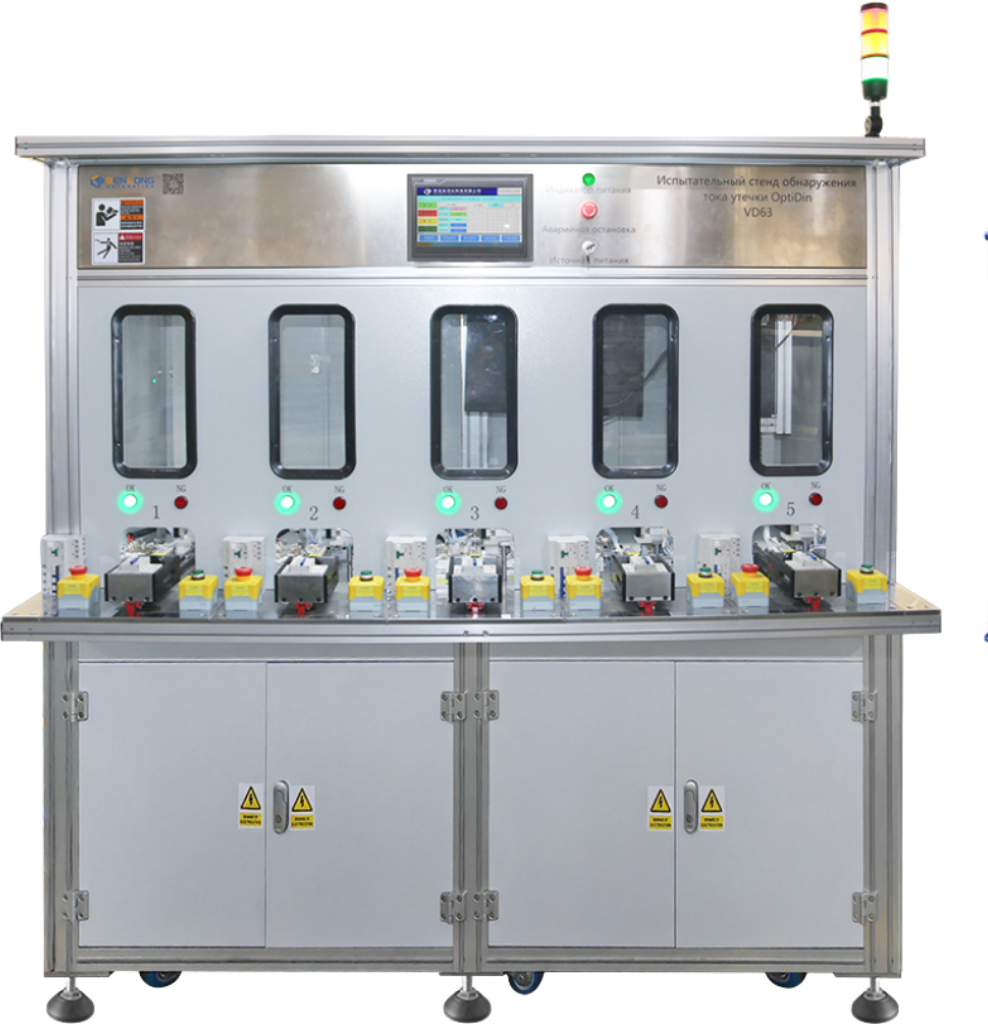
RCBO semi automatic comprehensive test bench
View Details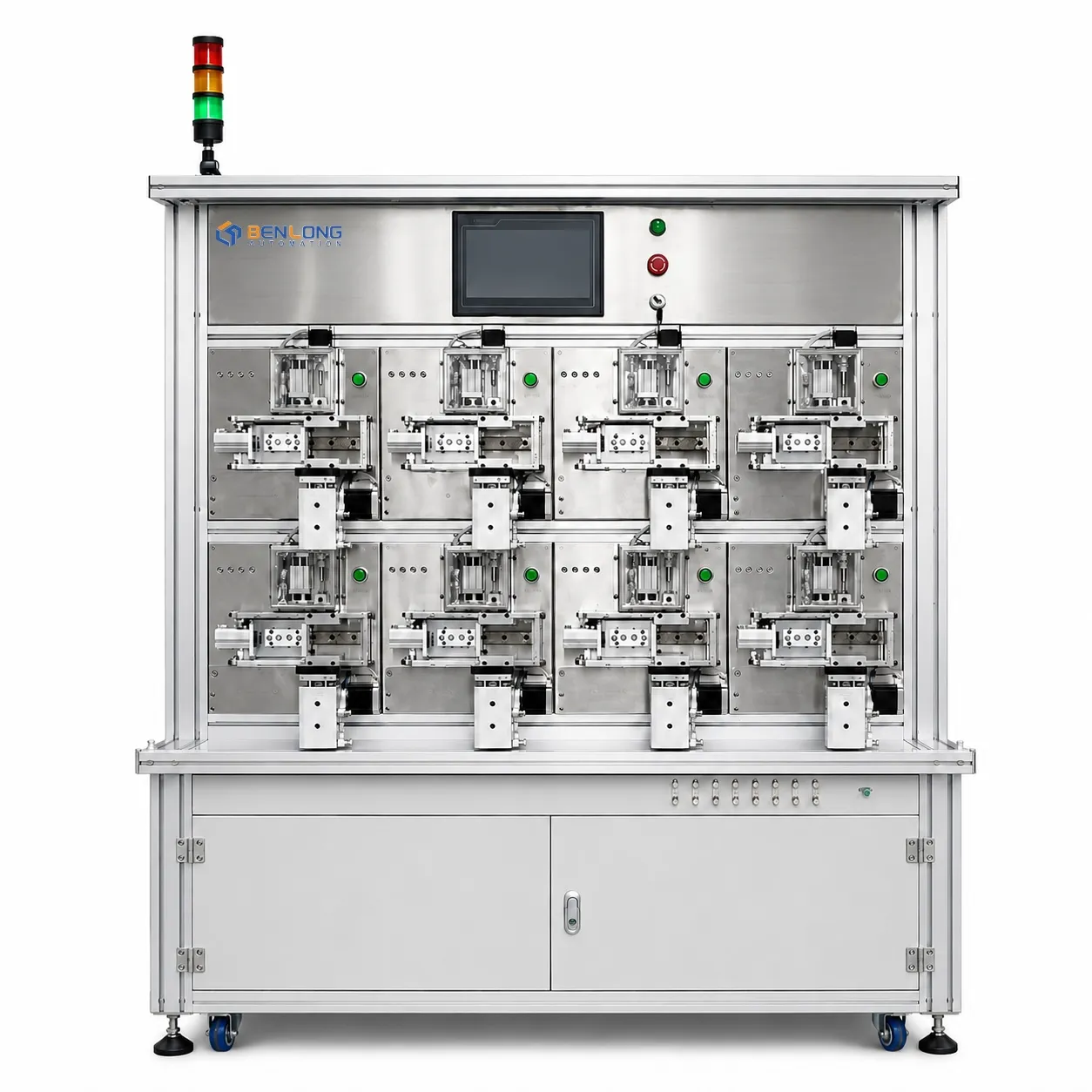
MCB semi-automatic thermal trip calibration bench Type-A
View Details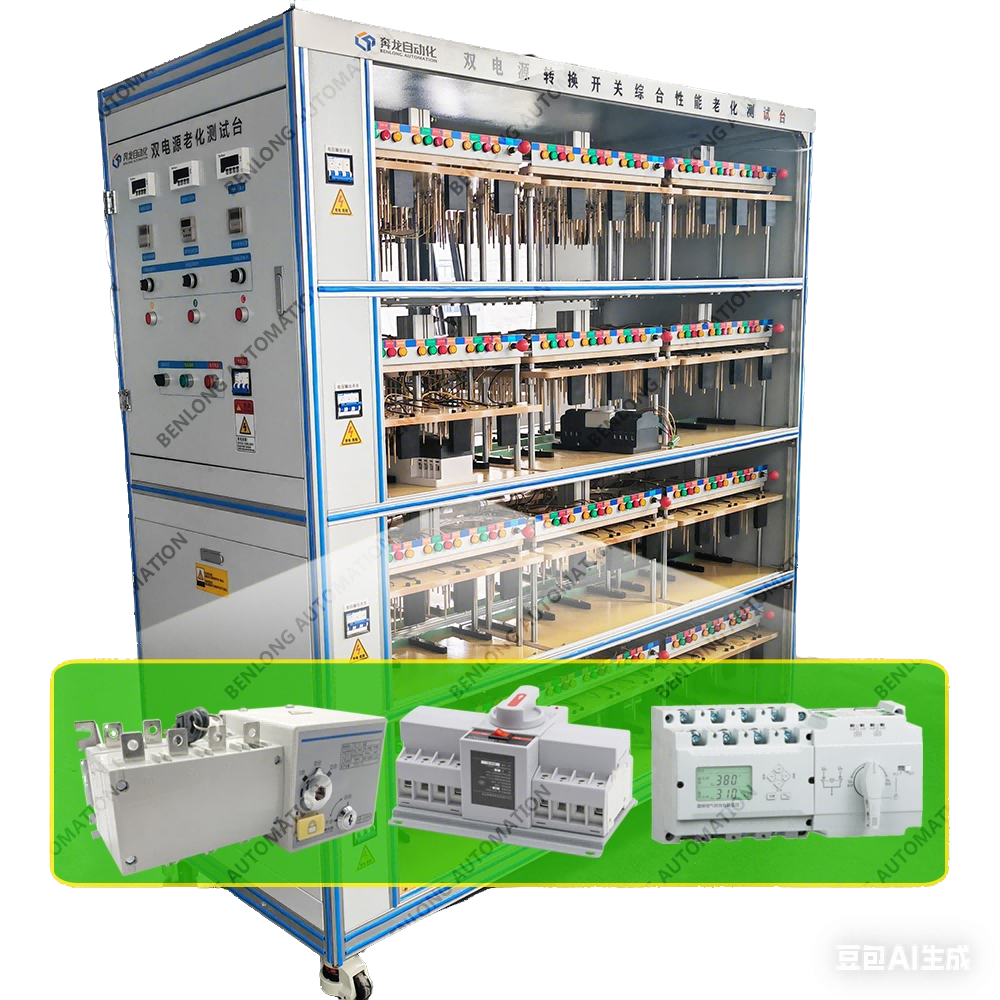
ATS aging test bench
View Details
MCCB Laboratory Integrated Testing bench
View Details